Ask a gardener what task causes the most stress, and nine times out of 10 the answer will be "pruning!" While I can't give you an exhaustive lesson on all the aspects of pruning (strangely enough, they won't give me the entire magazine), here are a few pointers, explanations and suggestions to help demystify a spring ritual.
That is the question, and Jodi DeLong has the answers.
Pruning depends on both the gardener's tastes and on the plant. You may need to prune a shrub that is in too small a location for its normal mature size, or merely to cut back tips of branches killed by winter weather. You may wish to change the shape or the type of growth, focusing on one strong leader in a tree rather than a forked top that will grow weakly and could prove hazardous.
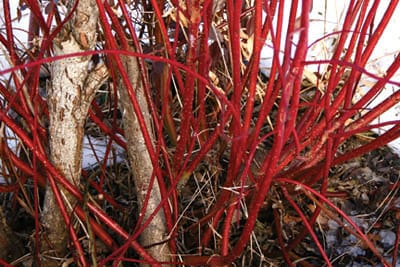
In our garden, I prune to remove deadwood and to thin out shrubs such as forsythia and lilac that otherwise would grow too large. I also prune to get more flowers or more colour from a shrub. Because we have some fairly young trees near the roadside edge of our property, I have had to remove some branches for traffic purposes, as well as to make it easier for my long-suffering spouse to mow under the trees. I cut back most branches of the red osier dogwood because I love the brilliant red colour of new twigs in winter months, and thin out some of the roses to promote better flowering. But despite what sounds like a lot of work, the pruning we do is minimal, because I like the natural shape of most shrubs and trees and we have room for them to stretch their limbs.
Some energetic gardeners use specialized pruning techniques to shape their shrubs or trees. Topiary, an architectural style of pruning that creates dramatic shapes or patterns in trees or shrubs, is popular in some public as well as private gardens, but requires much more skill and patience than a little tidying up of deadwood. Espalier pruning creates a more two-dimensional shape and is ideal for fruit-bearing trees in small spaces, such as against walls. The most refined and extreme form of pruning is probably bonsai, where entire trees are pruned to remain miniature, and kept in containerized settings.
The average gardener will benefit from following the three "Ds" of pruning: prune to remove dead, damaged or diseased wood. The Three Ds usually apply to plants that have been growing for at least a few years; most shrubs will not need pruning if they have been growing for only a year or two. Examples of each of the three Ds are cleaning off frost-killed tips of shrubs in spring or branches broken by snow or wind, and removing diseased areas, such as black knot in cherries and other fruit trees.
 When to prune is also a question that plagues many gardeners. Those of us who live in rural locales are accustomed to seeing farm workers shivering in fruit trees throughout the winter. Structural pruning of trees or thinning of overgrown shrubs can be done in late winter or early spring before bud break. But if you go racing out into the snow to cut back your forsythia, lilacs, and other early-flowering shrubs, you'll find that you have few or no flowers come spring, because you've cut the flower buds off with the shoots you have removed.
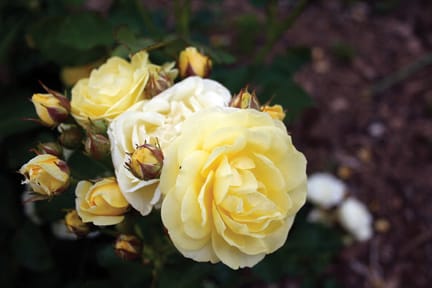
The rule of thumb is to prune spring-flowering shrubs such as forsythia, lilac, quince, and rhododendrons immediately after they flower, while later-blooming plants such as roses and hydrangeas can be done in late winter or early spring before flowering. However, if your shrubs don't bloom on last year's wood, you want a light hand in pruning lest you cut off branches that would have flowered. The cutoff date for being considered spring-flowering is late May for most of Atlantic Canada, and a couple of weeks later for the colder areas of the region. Most professionals advise against pruning after late July, because new growth that develops will not be hardened off enough to withstand the cold months and may simply die back over winter.
When you go about pruning, remember that you're redirecting growth in a plant; you're stopping it from growing in one direction, so new growth will come from buds along the stem or branch being pruned. In most cases, you'll want to cut close to a bud that is facing out and away from the main part of the plant. Otherwise, new branches will grow into the centre of the plant. Don't cut too high above a bud, and make sure to slope the cut away from the bud.
If you're cutting a branch from a tree, don't leave a stub that will eventually die and introduce rot into the tree; cut the branch off quite near to flush with the main branch, and don't bother with applying any of the so-called wound dressings that are available. Research in recent years has shown that trees have their own way of healing. Applying tree wound dressings simply locks in moisture and any pathogens that might be present, setting up ideal conditions for rot to develop.
Another pruning rule of thumb is never to remove more than a third of the plant in one year. But poor pruning is like a bad haircut; it will usually just grow out and you can correct any mistakes next time time. It is seldom life threatening, unless you cut the plant back too much.
What should you do with your prunings? Some gardeners chop them up before adding them to a compost pile; some use them for mulch; others make a brush pile as a natural windbreak or habitat for wildlife and birds. Don't compost or mulch diseased wood. Burn the prunings, then add the ashes to your compost heap as a nutrient source.
Finally, if you're still uncertain about pruning, do yourself a favour and buy a good book on the subject, preferably one that has before and after photos, and that illustrates different types of cuts. Then you'll never feel like your garden is getting the short end of the stick - or the pruning saw.